
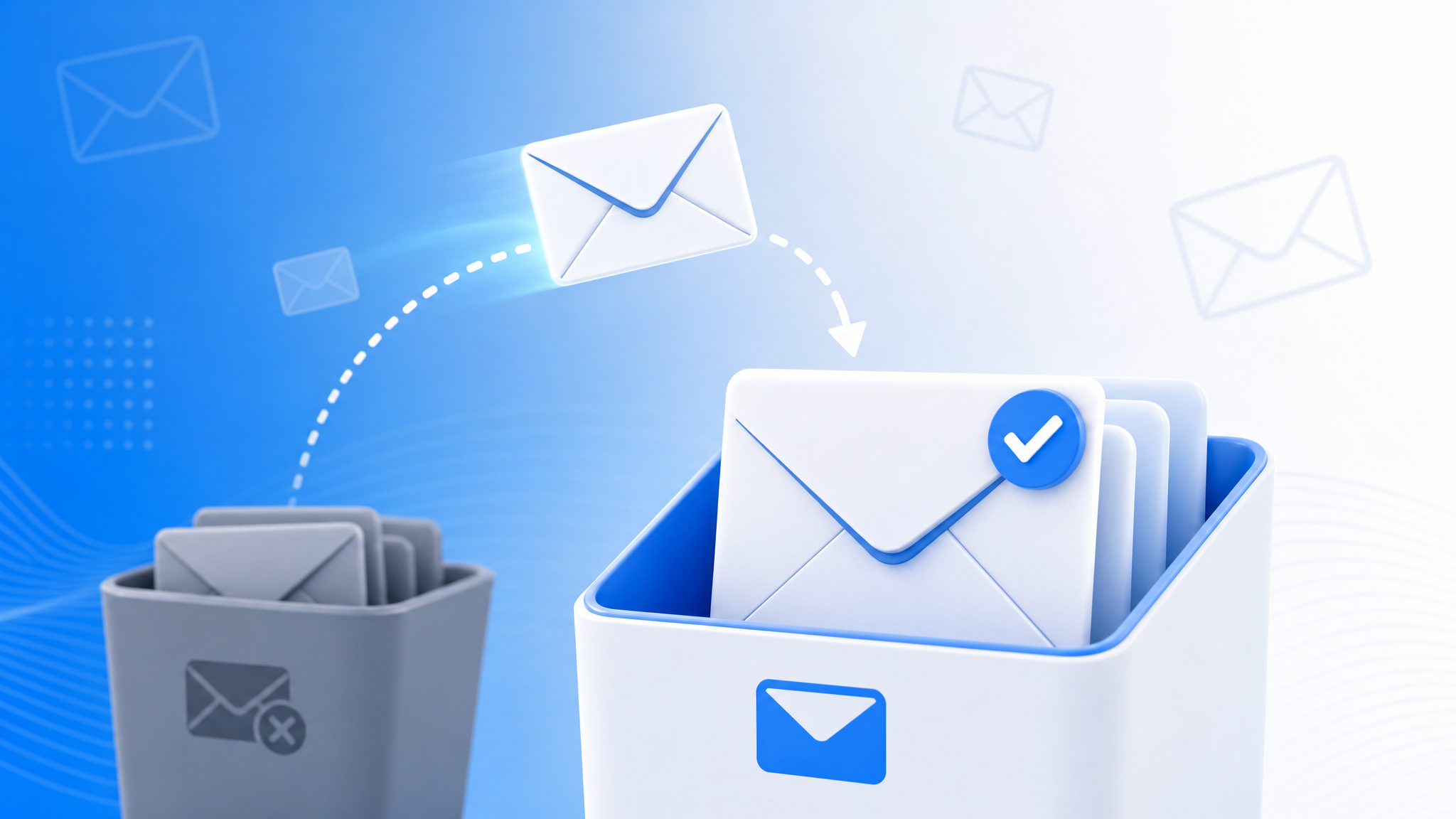
This email deliverability guide for 2026 covers everything you need to reach the inbox. You spent hours crafting the perfect email. The subject line is brilliant. The copy is compelling. The offer is irresistible.
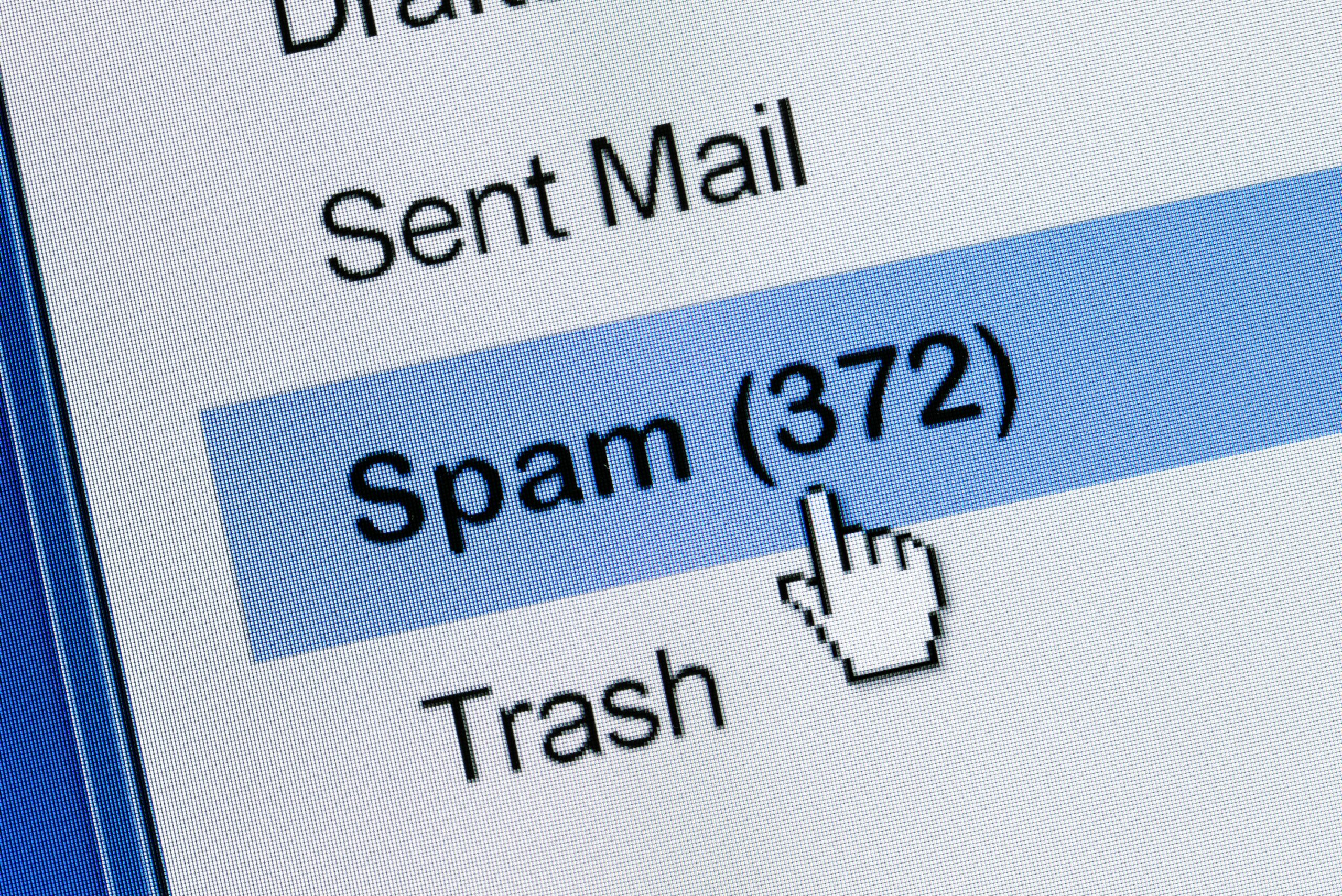
And then it lands in the spam folder. Or the promotions tab. Or — worse — it’s silently blocked and you never even know.
Email deliverability is the difference between a campaign that converts and a campaign that doesn’t exist. Yet most marketers spend 90% of their time on content and 10% on deliverability — when it should be the other way around.
In this guide, you’ll learn exactly what email deliverability is, why it matters more than ever in 2026, and the step-by-step process to ensure your emails reach the inbox — every time.
What Is Email Deliverability? Complete 2026 Guide
Email deliverability is the ability of your emails to reach your subscribers’ inboxes — not their spam folders, not their promotions tabs, and not being silently blocked by the receiving server.
Delivery vs. Deliverability: They’re Not the Same
| Metric | Definition | Example |
| Delivery rate | Emails accepted by the receiving server (even if sent to spam) | “98% delivery rate!” sounds great — but 30% could be in spam |
| Inbox placement rate | Emails that actually land in the primary inbox | The metric that matters. Aim for 95%+ |
Always ask your email platform about inbox placement rate — not delivery rate. A “delivered” email can still be in the spam folder.
Why Your Emails Go to Spam
Email providers (Gmail, Yahoo, Outlook) use hundreds of signals to decide where your email lands. These signals fall into three categories:
1. Authentication Signals (Technical)
Is your email *actually* from who it claims to be from?
The three pillars of email authentication:
| Protocol | What It Does | Priority |
| SPF (Sender Policy Framework) | Tells receiving servers which IPs are allowed to send email from your domain | 🔴 Critical |
| DKIM (DomainKeys Identified Mail) | Adds a cryptographic signature to verify the email hasn’t been tampered with | 🔴 Critical |
| DMARC (Domain-based Message Authentication, Reporting & Conformance) | Tells receiving servers what to do if SPF or DKIM checks fail | 🔴 Critical |
If you don’t have all three set up, your deliverability is compromised. Period.
2. Reputation Signals (Sender Behavior)
Are you a “good sender” or a “bad sender”?
Key reputation factors:
- Bounce rate — Keep it under 2%. Above 5% and you’re in trouble.
- Complaint rate — Keep it under 0.1% (that’s 1 complaint per 1,000 emails). Above 0.3% = Gmail will start blocking you.
- Spam trap hits — Never buy email lists. Spam traps are planted in purchased lists.
- Engagement — Gmail and Yahoo heavily weigh whether recipients open and interact with your emails.
3. Content Signals (What’s in the Email)
Yes, content still matters — but it’s no longer the #1 factor.
- Spam-trigger words (“FREE!!!”, “Act now!”, “Limited time offer!!!”)
- Excessive capitalization and exclamation marks
- Image-only emails with no text
- Misleading subject lines
- Poor text-to-image ratio
The 7-Step Email Deliverability Checklist
Step 1: Authenticate Your Sending Domain
Without authentication, you’re sending with a fake ID. Here’s what to do:
SPF Record:
Add a TXT record to your DNS:
v=spf1 include:_spf.your-email-platform.com ~all
DKIM Record:
Your email platform will generate a DKIM key pair. Add the public key as a TXT record in your DNS.
DMARC Record:
Start with a “none” policy (monitoring only), then move to “quarantine” or “reject”:
v=DMARC1; p=none; rua=mailto:[email protected]
Step 2: Warm Up Your Sending Domain
If you’re using a new domain or a new sending IP, you need to warm it up.
Don’t send to 50,000 subscribers on day one. Instead:
| Day | Volume | Recipients |
| 1-3 | 500/day | Most engaged subscribers only |
| 4-7 | 1,000/day | Engaged + moderately engaged |
| 8-14 | 2,500/day | Broader active list |
| 15-21 | 5,000/day | Add less engaged |
| 22+ | Full volume | Entire list |
If you’re using a shared IP (common with most email platforms), the warm-up is managed for you — but you should still ease into high volumes.
Step 3: Clean Your Email List
A dirty list is the #1 cause of deliverability problems.
Remove immediately:
- Hard bounces (invalid email addresses)
- Unsubscribes (legally required)
- Known spam traps
- Role-based emails (info@, admin@, sales@) — these have high complaint rates
Remove after re-engagement campaign:
- Subscribers who haven’t opened in 6+ months
Never:
- Buy email lists
- Scrape emails from websites
- Add people who didn’t explicitly opt in
Step 4: Make Unsubscribing Easy
This sounds counterintuitive. Why would you want people to unsubscribe?
Because a subscriber who wants to leave but can’t find the unsubscribe button will hit “Mark as Spam” instead. A spam complaint hurts your reputation 100x more than an unsubscribe.
Best practices:
- One-click unsubscribe (required by Gmail and Yahoo since Feb 2024)
- Unsubscribe link visible in every email
- Honor unsubscribe requests immediately (within 24 hours legally, within seconds ideally)
Step 5: Monitor Your Sender Reputation
Check these regularly:
| Tool | What It Tells You | URL |
| Google Postmaster Tools | Gmail-specific deliverability data | gmail.com/postmaster |
| Microsoft SNDS | Outlook/Hotmail deliverability data | snds.microsoft.com |
| MXToolbox | Blacklist checks, SPF/DKIM/DMARC validation | mxtoolbox.com |
| Mail Tester | Quick spam score check | mail-tester.com |
Step 6: Optimize Your Email Content
- Text-to-image ratio: Aim for 60% text, 40% images
- Subject line: Under 50 characters, no ALL CAPS, no excessive punctuation!!!
- Personalization: Use the recipient’s name — it signals legitimacy
- Alt text: Every image should have alt text
- Plain text version: Always include a plain-text alternative
Step 7: Monitor Engagement and Adjust
Email providers watch how recipients interact with your emails. If engagement drops, your deliverability drops.
Proactive strategy:
- Segment out subscribers who haven’t engaged in 60 days — send them less frequently
- Run a re-engagement campaign every quarter
- Suppress (stop emailing) subscribers who haven’t engaged in 6+ months
New in 2026: What’s Changed for Deliverability
Gmail and Yahoo’s New Requirements
Since early 2024 — and now strictly enforced in 2026 — Gmail and Yahoo require:
- DMARC authentication for bulk senders (5,000+ emails/day to Gmail/Yahoo)
- One-click unsubscribe (RFC 8058) in every email header
- Spam rate under 0.3% — measured by Google’s Postmaster Tools
- Valid forward and reverse DNS records
If you’re not compliant, your emails are being throttled or rejected right now.
Apple Mail Privacy Protection (MPP) — The New Normal
Apple MPP has been around since 2021, but its impact is now fully baked into the ecosystem:
- Open rates are inflated — Apple pre-loads email content, triggering “opens” that aren’t real
- Click rates matter more — Focus on clicks as your primary engagement metric
- Open-time personalization is unreliable — Don’t use it for content that changes based on opens
- Segments based on “opened in last X days” include Apple MPP noise — Filter it out if possible
BIMI — Brand Indicators for Message Identification
BIMI is the newest authentication standard — it displays your brand logo next to your email in the inbox.
Requirements:
- DMARC policy must be at “quarantine” or “reject” (p=quarantine or p=reject)
- A verified SVG logo file
- A Verified Mark Certificate (VMC) — costs ~$1,000-1,500/year
Is BIMI worth it in 2026? For B2C brands where inbox recognition matters — yes. For B2B where recipients recognize your name — the ROI is lower. Start with SPF/DKIM/DMARC first.
Common Deliverability Myths Debunked
| Myth | Reality |
| “SPF alone is enough” | You need SPF + DKIM + DMARC. All three. |
| “Unsubscribes hurt deliverability” | Spam complaints hurt. Unsubscribes are neutral. |
| “Words like ‘free’ always trigger spam” | Content filtering is contextual, not keyword-based. “Free shipping on your order” won’t trigger spam. “FREE!!! CLICK NOW!!!” might. |
| “A dedicated IP solves everything” | A dedicated IP is only better if you have high, consistent volume. Low-volume dedicated IPs actually hurt deliverability. |
| “Double opt-in guarantees inbox placement” | Double opt-in is great for list quality, but it doesn’t bypass spam filters. |
Deliverability Troubleshooting: When Things Go Wrong
Symptom 1: Sudden Drop in Open Rates
Check:
- Did you change your sending domain or IP?
- Did you send to a stale segment?
- Is your DMARC report showing authentication failures?
- Did you recently increase volume dramatically?
Fix: Pause sending. Check authentication. Warm up again if needed.
Symptom 2: Emails Going to Spam for Gmail Only
Check:
- Google Postmaster Tools — what’s your spam rate?
- Domain reputation in Postmaster Tools
- Are you on any blacklists? (Check MXToolbox)
Fix: Improve engagement. Send only to engaged subscribers for 2-4 weeks to rebuild reputation.
Symptom 3: High Bounce Rate
Check:
- Are you using a clean list?
- Are there typos in email addresses?
- Is your list old (never cleaned)?
Fix: Run list validation. Remove hard bounces immediately. Implement real-time email verification on signup forms.
The Bottom Line
Email deliverability isn’t a one-time setup. It’s an ongoing practice.
Here’s your maintenance schedule:
- Weekly: Check bounce rate and complaint rate
- Monthly: Review Google Postmaster Tools data
- Quarterly: Re-engagement campaign for inactive subscribers
- Annually: Full deliverability audit (authentication, blacklists, list hygiene)
The businesses that take deliverability seriously don’t just reach the inbox more often — they generate 20-30% more revenue from the exact same email list.
_Ready to improve your email deliverability? Start with ClickSuccess — built-in DKIM, SPF, DMARC setup, spam scoring, and deliverability monitoring._
For technical deliverability data, visit Litmus’s deliverability resources.


 English
 Vietnamese