
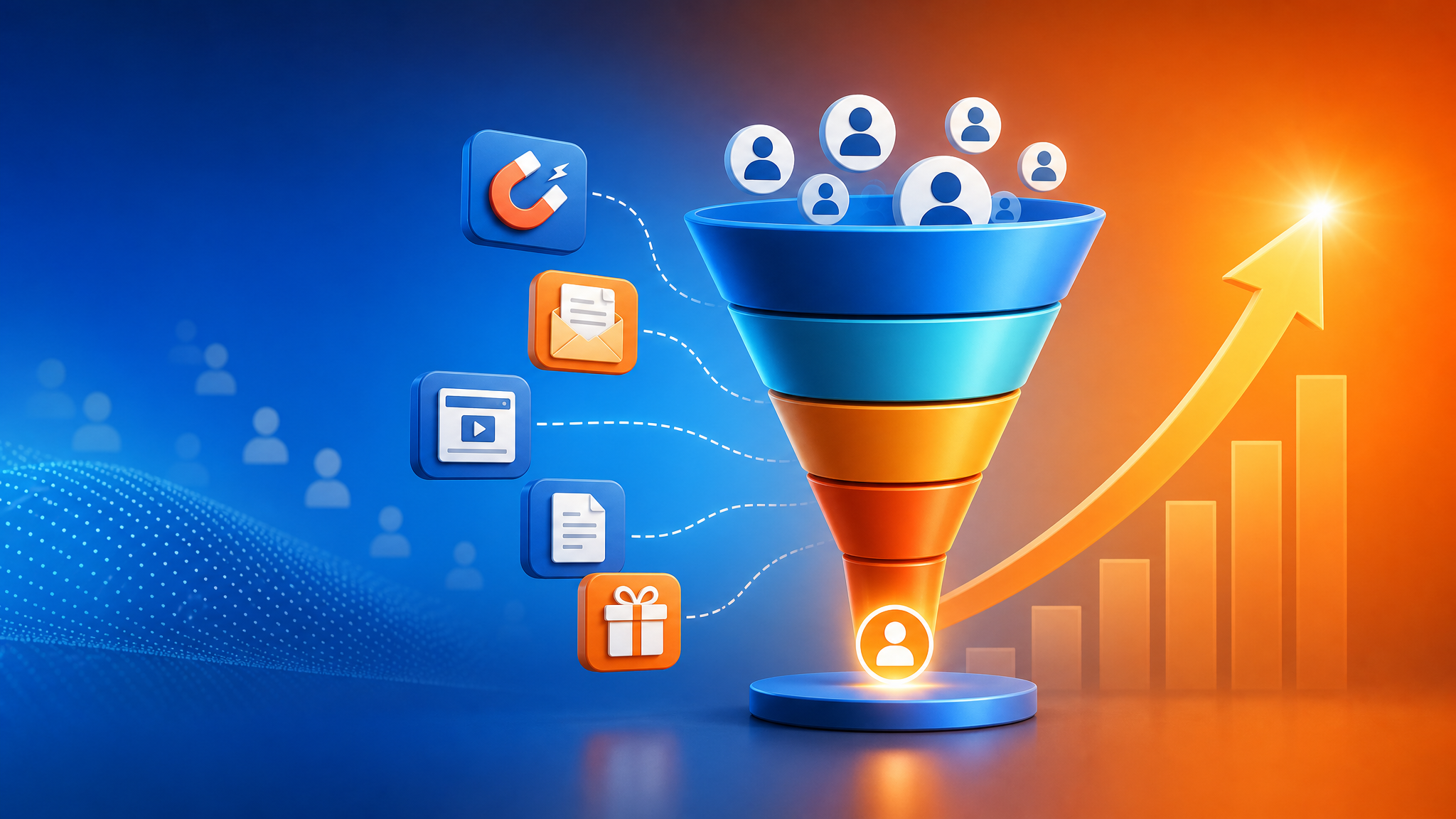
Effective lead generation strategies are the backbone of any successful marketing plan. 61% of marketers say generating traffic and leads is their biggest challenge. And 80% of new leads never convert into customers.
Lead generation is hard. But it’s also the lifeblood of every business. Without a steady stream of new leads, your pipeline dries up, your revenue plateaus, and your growth stops.
In this guide, you’ll discover 20 proven lead generation strategies for 2026 — from classic tactics that still work to emerging approaches you haven’t tried yet.
What Are Lead Generation Strategies in 2026?
Lead generation is the process of attracting potential customers and capturing their contact information so you can nurture them toward a purchase.
A lead is someone who has:
- Shown interest in your product, service, or content
- Provided their contact information (usually email)
- Given you permission to contact them
20 Lead Generation Strategies
Strategy 1: Content Marketing with Lead Magnets
How it works: Create valuable content (blog posts, videos, podcasts). Offer a related lead magnet (ebook, checklist, template) in exchange for an email address.
Example: A blog post about “email deliverability” offers a “DKIM/SPF/DMARC Setup Checklist” as a content upgrade.
Why it works: You attract people who are already interested in your topic, then offer something to deepen their engagement.
Key metrics: Content upgrade conversion rate: 3-7%
Strategy 2: Webinars and Live Workshops
How it works: Host a free educational webinar. Require registration (email). Deliver massive value. Pitch at the end.
Example: “How to Double Your Email Open Rates — Free 60-Minute Workshop”
Why it works: Webinars convert at 20-40%. Attendees who stay until the end are highly engaged and likely to buy.
Strategy 3: Free Tools and Calculators
How it works: Build a free tool that solves a specific problem. Require an email to access results.
Example: “Email ROI Calculator — see how much revenue your list could generate”
Why it works: Interactive tools have higher engagement than static content. The results are personalized and shareable.
Strategy 4: Exit-Intent Popups
How it works: Show a popup when a visitor is about to leave your site. Offer a compelling reason to stay connected.
Example: “Wait! Before you go — grab our free email marketing checklist. It’s the one we use to get 40%+ open rates.”
Why it works: Recovers 10-15% of abandoning visitors. This is traffic you’ve already paid for or earned.
Strategy 5: Gated Content (Strategic Use)
How it works: Place your most valuable content behind an email wall.
What to gate: In-depth guides, original research, templates, swipe files, video courses
What NOT to gate: Blog posts, basic information, content designed to attract new visitors
Why it works: Gated content signals high value. If it’s truly worth the exchange, visitors will opt in.
Strategy 6: Quizzes and Assessments
How it works: Create an interactive quiz. Require an email to see results.
Example: “What’s Your Email Marketing IQ? Take the 2-Minute Quiz”
Why it works: Quizzes have an average conversion rate of 33%. People love learning about themselves.
Strategy 7: Referral and Affiliate Programs
How it works: Incentivize existing customers and subscribers to refer new leads.
Example: “Refer a friend and both get 20% off your next purchase” or “Earn 30% recurring commission for every referral”
Why it works: Referred leads convert 30% better than leads from other channels. Trust is pre-built.
Strategy 8: Social Media Lead Magnets
How it works: Share your lead magnet on social platforms with a direct link to your landing page.
Platform-specific tactics:
- LinkedIn: Carousel posts that tease your lead magnet. Link in comments.
- Twitter/X: Thread summarizing your guide. Link in the final tweet.
- Instagram: Stories with link stickers. “Swipe up” or “Link in bio.”
- YouTube: Mention your lead magnet in the intro and description.
Strategy 9: Guest Blogging and Podcast Appearances
How it works: Contribute to publications and podcasts your target audience already follows. Your bio or episode description links to your lead magnet.
Why it works: You borrow trust and audience from established platforms. One guest post can generate leads for years.
Strategy 10: Paid Advertising with Lead Magnets
How it works: Run ads that promote a lead magnet (not your product directly). Send clicks to a dedicated landing page.
Ad platforms:
- Google Ads (search intent)
- Facebook/Instagram Ads (demographic targeting)
- LinkedIn Ads (B2B, job title targeting)
- YouTube Ads (video content promotion)
Why it works: Low-friction offer → email capture → nurture sequence → purchase. The lead magnet reduces cost per lead.
Strategy 11: SEO-Optimized Content
How it works: Create blog content that ranks for keywords your target audience is searching for. Place signup forms and content upgrades throughout.
Why it works: Organic traffic is free and compounding. A blog post that ranks #1 can generate leads for years with zero ad spend.
Strategy 12: Email Signature CTAs
How it works: Add a link to your lead magnet in your email signature.
Example:
Victoria Damoz
Marketing Manager | ClickSuccess
📥 Download our free Email Marketing Checklist → [link]
Why it works: You’re already sending emails. Adding a CTA costs nothing and can generate leads passively.
Strategy 13: LinkedIn Outreach and Networking
How it works: Connect with potential leads. Don’t pitch immediately. Engage with their content. When relevant, share a resource (your lead magnet).
Why it works: B2B leads from LinkedIn are often higher quality because you can target by title, industry, and company size.
Strategy 14: In-Person Events and Networking
How it works: Collect emails at conferences, meetups, and trade shows. Use a tablet signup form or a QR code that leads to your landing page.
Why it works: Face-to-face connections create stronger relationships. Follow up within 24 hours.
Strategy 15: Co-Marketing and Partnerships
How it works: Partner with a complementary (non-competing) business. Co-create content. Share each other’s lead magnets.
Example: An email marketing platform and a CRM company co-host a webinar: “How to Align Email Marketing and Sales”
Why it works: You double your reach without doubling your effort.
Strategy 16: Community Building
How it works: Create or participate in communities where your target audience hangs out — Slack groups, Discord servers, Reddit, Facebook Groups, industry forums.
The rule: Give value 90% of the time. Mention your lead magnet only when genuinely relevant.
Strategy 17: Video Content
How it works: Create educational videos. Include a CTA and link to your lead magnet.
Video types: Tutorials, behind-the-scenes, thought leadership, case studies, product demos
Why it works: Video builds trust faster than text. People feel like they know you before they ever talk to you.
Strategy 18: Podcasting
How it works: Host a podcast in your niche. Mention your lead magnet in each episode.
Why it works: Podcast listeners are highly engaged. They spend an average of 30+ minutes with your content — far more than blog readers.
Strategy 19: Free Trials and Freemium
How it works: Offer a free version or trial of your product. Require an email to sign up. Nurture free users toward paid plans.
Why it works: Free trials let prospects experience your value firsthand. The conversion rate from free to paid is higher when users have already integrated your product into their workflow.
Strategy 20: Surveys and Research
How it works: Conduct original research. Publish the results. Require an email to access the full report.
Example: “The State of Email Marketing 2026 — Survey of 1,000+ Marketers”
Why it works: Original data attracts backlinks, press mentions, and leads. It positions you as an authority.
Which Lead Generation Strategy Should You Start With?
Don’t try all 20 at once. Choose based on your situation:
If you have zero traffic:
→ Start with Strategy 9 (Guest Blogging) + Strategy 8 (Social Media)
If you have traffic but no conversions:
→ Start with Strategy 1 (Content Upgrades) + Strategy 4 (Exit-Intent Popups)
If you have leads but not enough:
→ Start with Strategy 10 (Paid Ads) to scale what’s already working
If you have a budget:
→ Strategy 10 (Paid Ads) + Strategy 2 (Webinars)
If you have no budget:
→ Strategy 1 (Content Marketing) + Strategy 11 (SEO) + Strategy 8 (Organic Social)
Lead Generation Metrics to Track
| Metric | Target |
| Traffic to landing page | Growing month-over-month |
| Landing page conversion rate | 3-10% |
| Cost per lead (CPL) | Decreasing over time |
| Lead-to-customer conversion rate | 2-5% |
| Time to conversion | Decreasing over time |
| Customer acquisition cost (CAC) | Lower than customer LTV |
Lead generation isn’t about one viral moment. It’s about building systems — multiple channels, multiple offers, working together to consistently fill your pipeline. Start with one strategy. Master it. Then add the next.
_Ready to capture and nurture more leads? Try ClickSuccess free — landing pages, popup forms, signup forms, and automated lead nurturing included._
Explore more strategies at HubSpot’s lead generation guide.


 English
 Vietnamese