
Lead nurturing email campaigns are the secret weapon of high-converting marketing teams. 80% of new leads never convert into customers. But businesses that excel at lead nurturing generate 50% more sales-ready leads at a 33% lower cost.
The difference? They don’t just collect email addresses — they build relationships. They educate. They stay top-of-mind until the lead is ready to buy.
In this guide, you’ll learn what lead nurturing email campaigns are, how they work, and how to build sequences that turn cold subscribers into paying customers — systematically and automatically.
What Are Lead Nurturing Email Campaigns?
Lead nurturing is the process of building relationships with potential customers through personalized, relevant content at every stage of their journey — from the moment they first show interest to the moment they’re ready to buy.
Why Most Leads Don’t Buy Immediately
Think about your own behavior. When you discover a new product or service:
- You might not need it right now
- You might need to research more
- You might need budget approval
- You might be comparing options
- You might simply forget
Lead nurturing solves all of these. You stay present, you stay relevant, and you’re there when they’re ready.
The Lead Nurturing Funnel: 4 Stages
Every subscriber moves through four stages. Your emails should match each one.
Stage 1: Awareness — “I have a problem”
The lead knows they have a problem but doesn’t know the solution yet.
What to send: Educational content
- Blog posts that define the problem
- Industry reports and statistics
- “What is X?” explainer content
- Checklists and frameworks
Example: A lead downloads an ebook about “improving team productivity.” They know productivity is a problem — but they don’t know what tools or methods solve it.
Stage 2: Consideration — “Here are the solutions”
The lead understands the problem and is evaluating solutions.
What to send: Comparison and evaluation content
- Solution comparisons (Tool A vs. Tool B)
- Case studies showing how others solved the same problem
- Webinars and demos
- Buyer’s guides
Example: The lead is now researching productivity tools. They’re comparing Asana vs. Monday vs. ClickUp.
Stage 3: Decision — “Which solution is best for me?”
The lead has narrowed down their options and is close to choosing.
What to send: Decision-support content
- Free trials and demos
- Pricing comparisons
- ROI calculators
- Customer testimonials and reviews
- “Why choose us” content
Example: The lead has shortlisted two tools. They need one final push to decide.
Stage 4: Retention — “I made the right choice”
The lead becomes a customer. Now you need to keep them.
What to send: Retention and advocacy content
- Onboarding sequences
- Tips for getting more value
- Product updates
- Referral requests
- Feedback surveys
6 Lead Nurturing Email Templates You Can Steal
Template 1: The Educational Drip
Best for: Leads who downloaded educational content (ebook, whitepaper, checklist)
Email 1 (Day 0) — Deliver the resource
Subject: Your [Resource Name] is ready — here's how to use it
Body: Quick-start guide. The top 3 takeaways. Link to download.
Email 2 (Day 3) — Go deeper
Subject: The one thing most people miss about [Topic]
Body: A specific insight that builds on the resource. Tease a related blog post or video.
Email 3 (Day 6) — Show proof
Subject: How [Company] used [Topic] to achieve [Result]
Body: Case study. Before and after. Specific numbers.
Email 4 (Day 10) — Bridge to solution
Subject: You've learned [Topic] — now here's how to implement it
Body: Common implementation challenges. Introduce your product naturally as the solution.
Template 2: The Case Study Sequence
Best for: Leads who visited your pricing page or requested a demo
Email 1 (Day 0) — The hero story
Subject: How [Customer] achieved [specific result] in [timeframe]
Body: The problem they faced. The solution they used. The results they got. Specific numbers.
Email 2 (Day 4) — Social proof collection
Subject: 3 more companies that transformed their [metric]
Body: Brief summaries of 3 case studies. Link to full versions.
Email 3 (Day 8) — Industry-specific proof
Subject: [Industry] companies are seeing [result]. Here's how.
Body: Case study from their specific industry. "If they can do it, you can too."
Email 4 (Day 12) — Call to action
Subject: Ready to be our next case study?
Body: Direct CTA. Free consultation, demo, or trial. "Let's write your success story."
Template 3: The “Objection Buster” Sequence
Best for: Leads who engaged but didn’t convert — they have objections
Email 1 (Day 0) — The price objection
Subject: "Is [Product] worth it?" Let's do the math.
Body: ROI calculation. Break down the cost vs. the value. Compare to alternative costs (doing nothing, using a cheaper tool, hiring).
Email 2 (Day 4) — The timing objection
Subject: "I'm not ready yet" — here's when most people say yes
Body: Acknowledge that timing is personal. Share data on when most customers convert. Offer a low-commitment next step.
Email 3 (Day 8) — The trust objection
Subject: What 500+ customers say about us (the good and the bad)
Body: Honest reviews. Not just 5-star — include constructive feedback and how you addressed it.
Email 4 (Day 12) — The commitment objection
Subject: You don't need to commit. Try it free for [X] days.
Body: Remove risk. Free trial, money-back guarantee, no credit card required.
Template 4: The Webinar Follow-Up Sequence
Best for: Webinar registrants — both attendees and no-shows
Email 1 (1 hour post-webinar) — Attendees
Subject: Thanks for joining! Here's the recording and slides
Body: Recording link. Slide deck. Mentioned resources. One key takeaway.
Email 2 (1 hour post-webinar) — No-shows
Subject: We missed you! Here's what you missed
Body: Recording link. "The #1 insight from the webinar." Tease what they can still access.
Email 3 (Day 2) — Both lists
Subject: Your questions, answered
Body: Top 3 questions from the Q&A. Detailed answers.
Email 4 (Day 5) — Offer
Subject: The special offer from the webinar (ends tomorrow)
Body: Limited-time offer. "This is what you get." Strong CTA.
Template 5: The Re-Engagement Nurture
Best for: Leads who have gone cold (no engagement in 60+ days)
Email 1 (Day 0) — The pattern interrupt
Subject: [Name], you've been on my mind
Body: Acknowledge the silence. Ask if they're still interested. Make it personal.
Email 2 (Day 5) — The best-of
Subject: Our top 3 resources from the last 60 days
Body: Share your best recent content. "In case you missed these."
Email 3 (Day 10) — The feedback ask
Subject: What should we do differently?
Body: Ask for feedback. "What content would actually be useful to you?"
Email 4 (Day 15) — The final check
Subject: Is this goodbye?
Body: Clear choice. Click to stay, or we'll stop emailing. Respect their decision.
Template 6: The Free Trial Nurture
Best for: SaaS free trial users
Email 1 (Day 0) — Welcome
Subject: Welcome to [Product]! Here's your 5-minute setup
Body: Quickstart guide. Link to setup. "Your first win in 5 minutes."
Email 2 (Day 2) — The “aha” moment
Subject: Did you try [key feature] yet?
Body: The one feature that delivers the fastest value. Step-by-step instructions.
Email 3 (Day 5) — Social proof + tips
Subject: How [Customer] got [result] in their first week
Body: Case study framed around the trial experience.
Email 4 (Day 9) — Upgrade prompt
Subject: Your trial ends in 5 days. Here's what happens next.
Body: Clear pricing. What they get on paid plan. What they lose on free.
Email 5 (Day 13) — Last chance
Subject: Last day of your trial — your data is saved
Body: Urgency. Remove risk (money-back guarantee). One-click upgrade.
How to Measure Lead Nurturing Success
Key Metrics to Track
| Metric | What It Measures | Benchmark |
| Sequence entry rate | How many leads enter the nurture | Depends on your lead gen volume |
| Email open rate | Initial engagement | 35-45% for nurture emails |
| Click-through rate | Content engagement | 5-10% per email |
| Sequence completion rate | How many finish the entire sequence | 40-60% |
| Conversion rate | Leads that become customers | 2-5% for cold leads, 10-20% for warm leads |
| Unsubscribe rate | Leads who opt out | Under 0.5% per email |
| Time to conversion | How long from entry to purchase | Varies by industry; track the trend |
Beyond Opens and Clicks
Track what happens *after* the email:
- Did they visit your pricing page?
- Did they book a demo?
- Did they start a free trial?
- Did they reply to the email?
These downstream actions matter more than opens.
7 Lead Nurturing Best Practices
1. Segment Before You Nurture
A lead who downloaded an SEO guide needs different content than a lead who downloaded a social media playbook. Segment by:
- Content interest: What did they download or engage with?
- Lead source: Where did they come from (organic, paid, referral)?
- Behavior: What pages have they visited? What emails have they clicked?
- Stage: Are they a new lead or a returning visitor?
2. Personalize Beyond [First Name]
Dynamic content tags are table stakes. True personalization means:
- Recommending content based on what they’ve already read
- Referencing their industry, company size, or role
- Adjusting the offer based on their behavior history
3. Match Content to Buying Stage
Don’t send a “buy now” email to someone who just downloaded their first ebook. Don’t send “what is email marketing” to someone who’s visited your pricing page. Match the content to where they are.
4. Use Behavior-Based Triggers
The most effective nurture emails are triggered by specific actions:
- Visited pricing page? → Send case study
- Watched demo video? → Send “schedule a call” CTA
- Downloaded competitor comparison? → Send “why choose us”
- Went silent for 30 days? → Send re-engagement email
5. Keep the Cadence Reasonable
- B2B: 1-2 emails per week during active nurture
- B2C / E-commerce: 2-3 emails per week maximum
- Re-engagement: Every 5-7 days for 2-3 emails, then stop
More emails ≠ more conversions. In fact, too many emails accelerate unsubscribes.
6. End Every Email With One Clear CTA
Not three CTAs. Not “check out our blog, and also follow us on social, and also buy our product.” One CTA per email. The single next step you want them to take.
7. Test, Learn, Iterate
A/B test:
- Subject lines (question vs. statement vs. curiosity gap)
- CTA placement (button vs. text link)
- Send time (morning vs. afternoon)
- Email length (short vs. long-form)
Lead Nurturing vs. Email Blasts: The Data
| Email Blast | Lead Nurturing Sequence | |
| Setup time | 1 hour | 3-5 hours (one-time) |
| Open rate | 15-25% | 35-55% |
| Click rate | 2-3% | 8-12% |
| Conversion rate | 0.5-1.5% | 3-8% |
| Revenue per email | $0.05-0.10 | $0.15-0.40 |
| Unsubscribe rate | 0.5-1.0% | 0.1-0.3% |
| Long-term value | One-time spike | Ongoing, compounding |
Lead nurturing generates 2-4x the revenue per email compared to batch blasts — and costs nothing extra once the sequence is set up.
Start Nurturing Today
Lead nurturing isn’t complicated. It’s just being helpful, being relevant, and being consistent — automatically.
Your action plan:
- Choose one lead source to nurture (new subscribers, trial users, or cold leads)
- Map out a 4-5 email sequence using the templates above
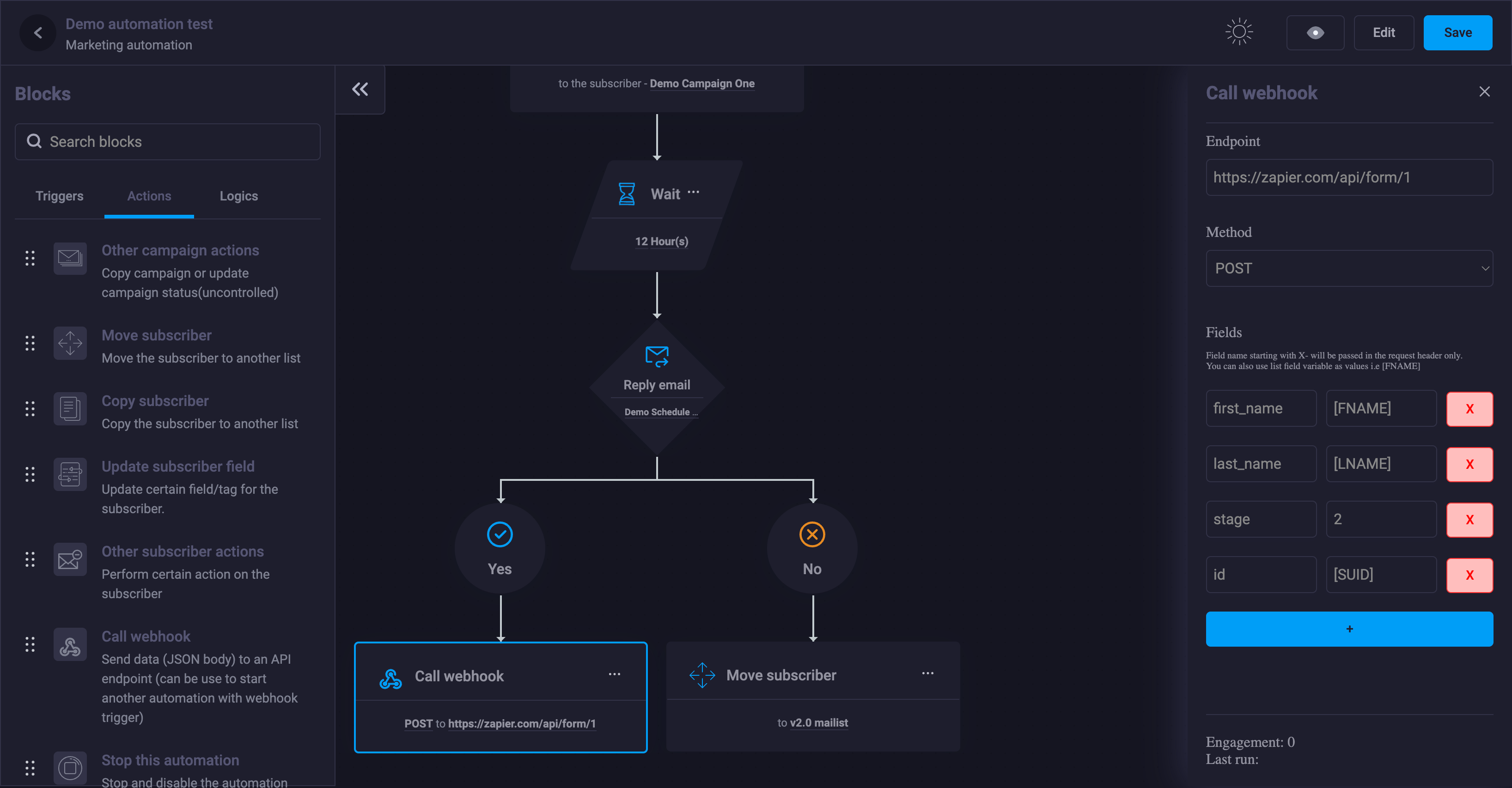
- Build it in your marketing automation platform
- Launch it this week
One nurture sequence, built once, will warm up leads and drive conversions for months — completely on autopilot.
_Ready to build your first lead nurturing campaign? Start your free trial with ClickSuccess — drag-and-drop automation builder included._
For more on lead nurturing, read HubSpot’s lead nurturing guide.


 English
 Vietnamese